
Frontier AI and Startup Execution: Key Innovations

Exploring new advancements in UAVs, robotics, and multimodal perception

February 15, 20261 min read
Pinar Okay

Pinar Okay

Sr Columnist

Today's article highlights groundbreaking research in frontier AI that impacts startup execution in fields like UAV management, robotics, and multimodal perception. These advancements not only push technological boundaries but also equip startups with the tools to innovate effectively.

Frontier AI and Startup Execution: Key Innovations

In today's rundown

UAV Preflight Planning Innovations

The Rundown

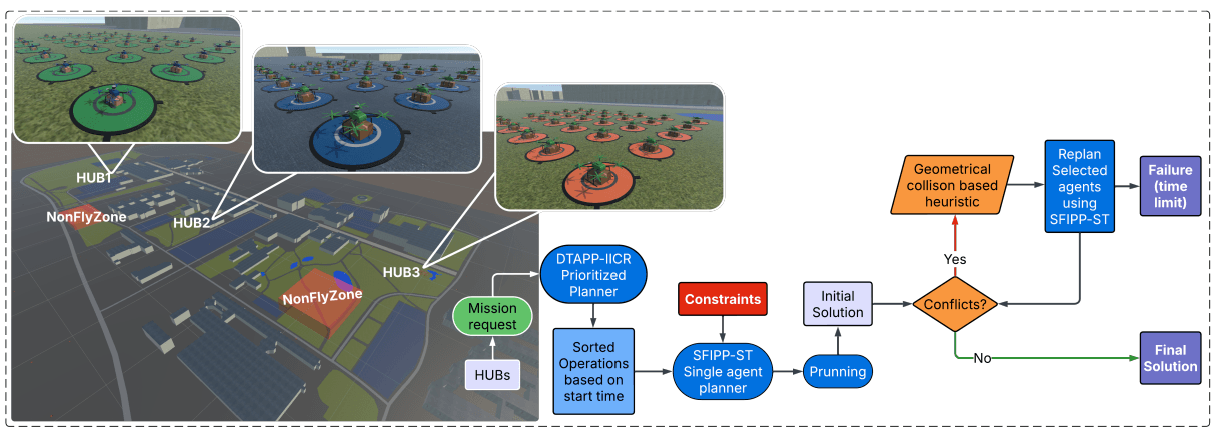
A recent study introduces DTAPP-IICR, a framework for planning UAV missions in dynamic airspace. This method prioritizes delivery urgency and efficiently resolves conflicts, achieving near-100% success with fleets of up to 1,000 UAVs. It significantly reduces runtime by 50% through innovative pruning techniques.

The details

  • Prioritizes missions based on delivery urgency.
  • Utilizes a novel 4D planner for trajectory optimization.
  • Achieves scalability in urban airspace management.

Why it matters

This innovation is critical for startups in the UAV sector, enabling scalable operations in complex environments, thus enhancing service delivery efficiency.

The Rundown

The introduction of Multi-Graph Search (MGS) enhances motion planning for high-dimensional robots. MGS focuses exploration on promising areas in the state space, allowing for efficient operation in real-time environments. Its proven effectiveness across various manipulation tasks marks a significant leap in robotics.

The details

  • Generalizes classical search techniques for better scalability.
  • Maintains multiple implicit graphs to optimize exploration.
  • Proven to be complete and bounded-suboptimal.

Why it matters

Startups can leverage MGS to enhance the reliability and speed of robotic systems, crucial for applications in logistics and automation.

Enhancements in Multimodal Perception

The Rundown

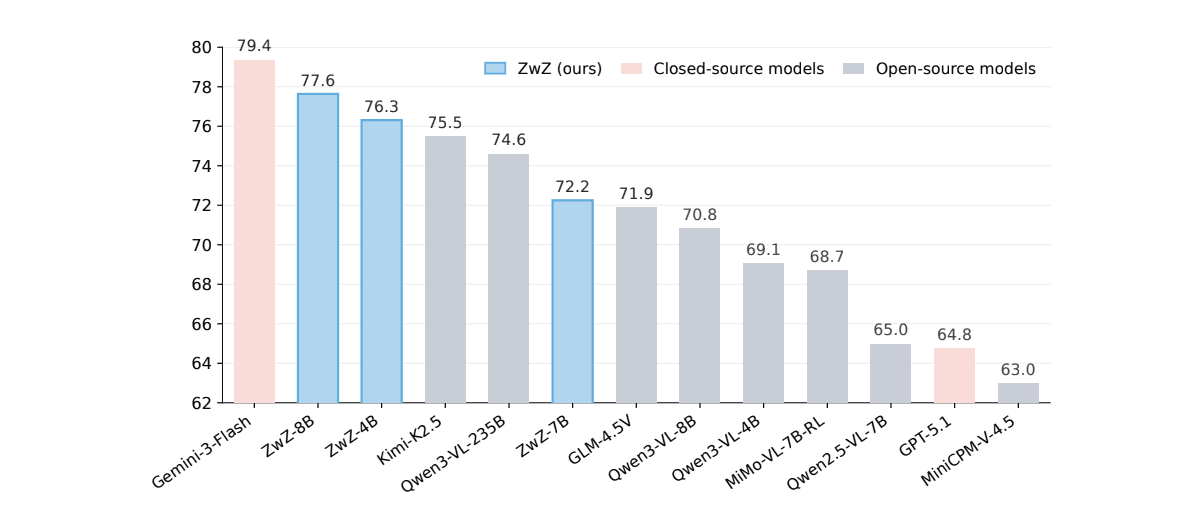
The Region-to-Image Distillation method promotes fine-grained perception in MLLMs by transforming zooming from inference to training. This approach improves performance across visual question answering benchmarks, aiding in multimodal cognition and reasoning tasks.

The details

  • Transforms inference techniques into training practices.
  • Improves fine-grained perception without latency issues.
  • Demonstrates leading performance on various benchmarks.

Why it matters

For startups utilizing MLLMs, this approach can streamline model training, enhancing capabilities in applications like customer service and content generation.

Community AI Usage

Every newsletter, we showcase how a reader is using AI to work smarter, save time, or make life easier.

Community Insights in 👥

Every article, we showcase how a reader is using AI to work smarter, save time, or make life easier. Today’s workflow comes from reader Joshua in London: "To keep my edge in the industry, I've developed a four-step process using ScienceToStartup insights. I start by researching the latest papers and tools mentioned here to stay ahead of industry trends. Once I identify a high-potential tool, I experiment with it in a small-scale project to test its compatibility with my setup. I then collaborate with community forums to share my findings and gather feedback. Finally, I scale the successful solutions into my main workflows, which has significantly enhanced my operational efficiency."

Trending AI Tools and AI Research

TensorFlow: A comprehensive open-source platform for machine learning.

PyTorch: An intuitive framework for deep learning research.

FastAPI: A modern, fast web framework for building APIs with Python.

Hugging Face Transformers: A library for natural language processing tasks.

OpenAI API: Access to advanced AI models for various applications.

Everything Else

NewPipe offers a non-algorithmic YouTube client.

The ArchWiki maintainers receive accolades for their work.

Off Grid enables offline AI text and image generation on phones.

Jikipedia turns Epstein’s emails into an encyclopedia.

Concerns arise around safety at xAI.

Frequently Asked Questions

DTAPP-IICR is a framework for UAV preflight planning, optimizing mission execution in dynamic airspace.
Multi-Graph Search enhances motion planning by maintaining multiple graphs, allowing for efficient exploration and scalability.
It's a method that improves fine-grained perception in multimodal large language models by streamlining the training process.

Related Articles

Help us improve ScienceToStartup experience for you